

Why Weld Neck Flanges are the “Safety Insurance” for High-Stress Piping Systems
The Price vs. Performance Dilemma For many procurement managers, the 20%-30% lower cost of a Slip-On (SO) flange is attractive. However, from an engineering perspective, the choice between SO and Weld Neck (WN) is a choice between “basic connectivity” and “structural integrity.” At DTC Flowtech, we advocate for WN flanges in critical paths for three specific reasons.
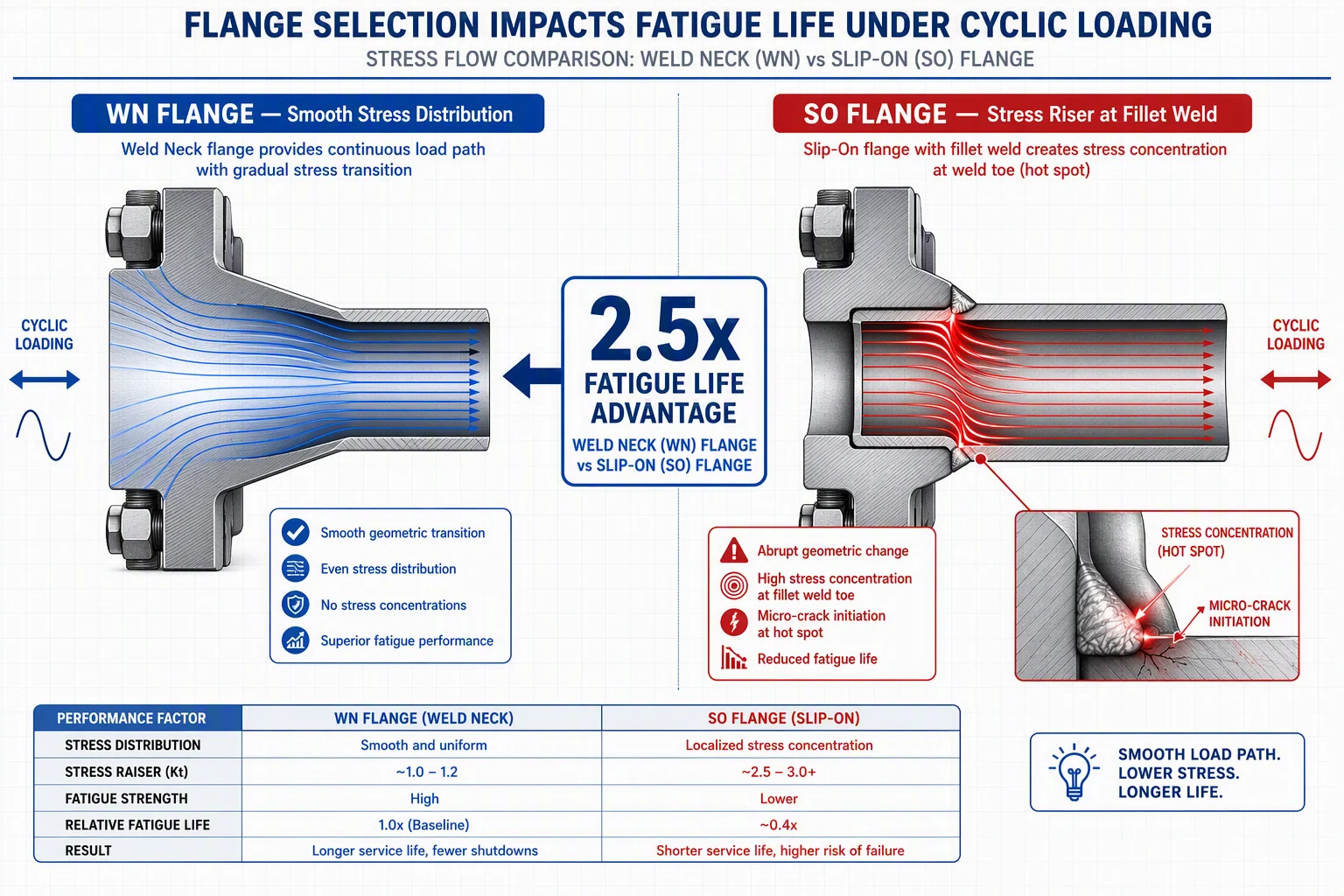
1. The 2.5x Fatigue Life Advantage Field data and stress analysis consistently show that a Weld Neck flange has a fatigue life approximately 2.5 times that of a Slip-On flange. In systems subject to cyclic loading—such as those with frequent thermal expansion or pressure surges—the SO flange’s fillet weld acts as a stress riser, eventually leading to micro-cracks. The WN flange’s tapered hub, conversely, distributes stress smoothly into the pipe.
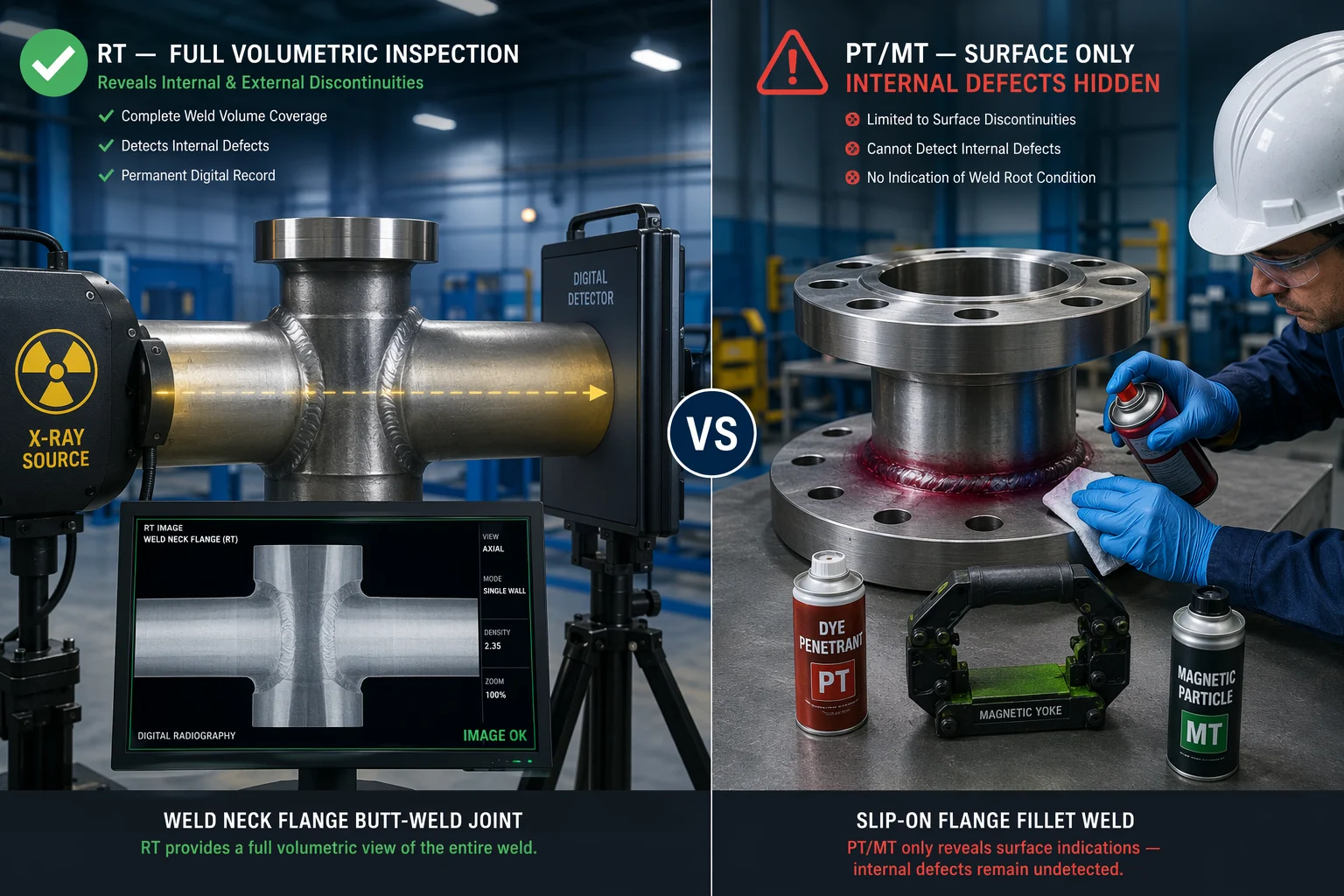
2. Inspectability: RT vs. Guesswork In high-risk industries (Oil & Gas, Chemical Processing), weld integrity must be verified. A Weld Neck flange uses a butt-weld, which is fully accessible for Radiographic Testing (RT). You get a clear “X-ray” of the entire weld volume. With Slip-On flanges, the fillet welds can only be surface-inspected (PT/MT), leaving internal defects hidden—a risk few engineers are willing to take in high-pressure steam or toxic media lines.
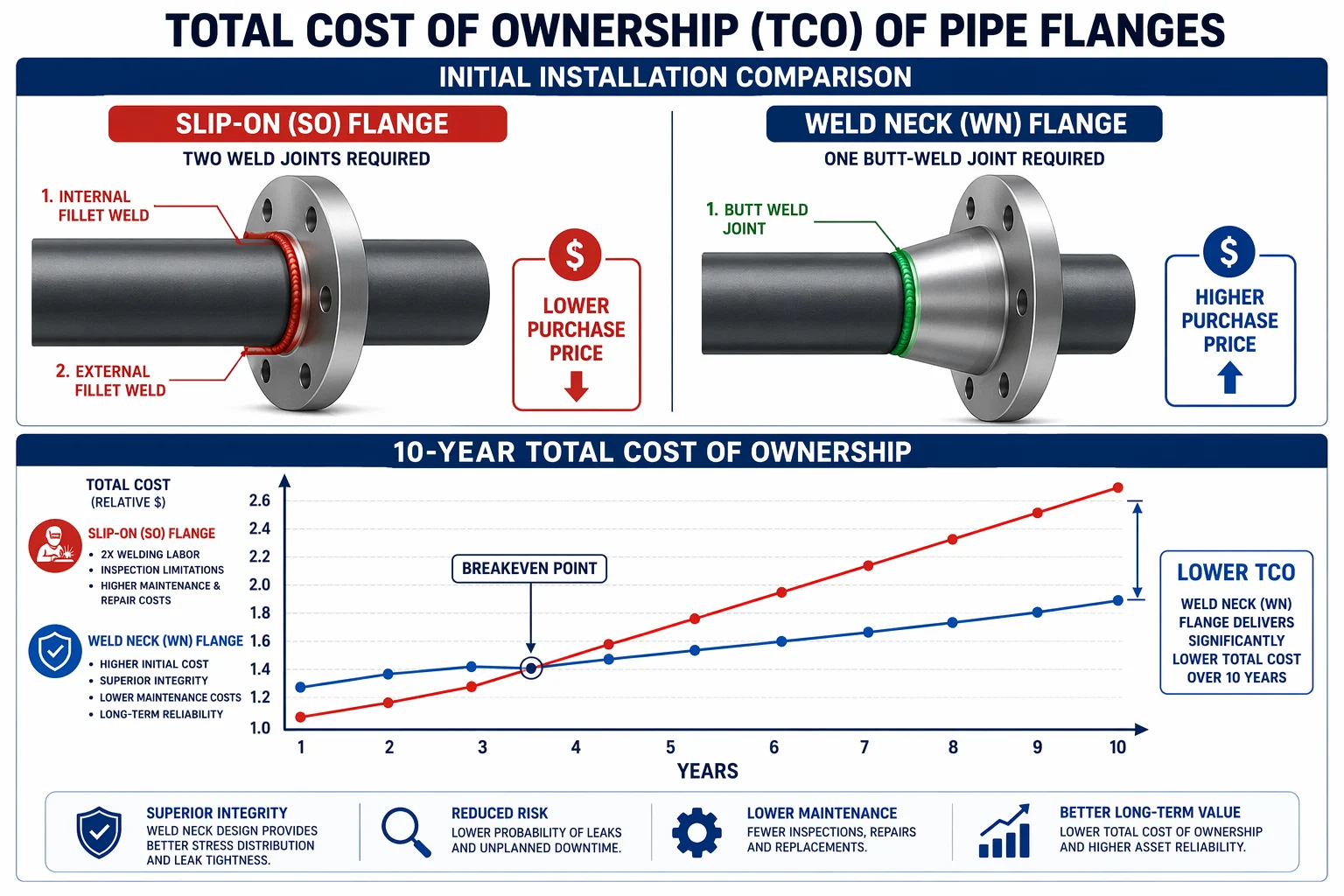
3. Total Cost of Ownership (TCO) While the SO flange is cheaper to buy, consider the installation labor:
- SO: Needs two welds (Internal and External).
- WN: Needs only one butt-weld. In large-scale projects, the reduced welding time and superior safety profile of WN flanges often lead to a lower TCO over a 10-year operational window, especially when avoiding even a single hour of unplanned shutdown.
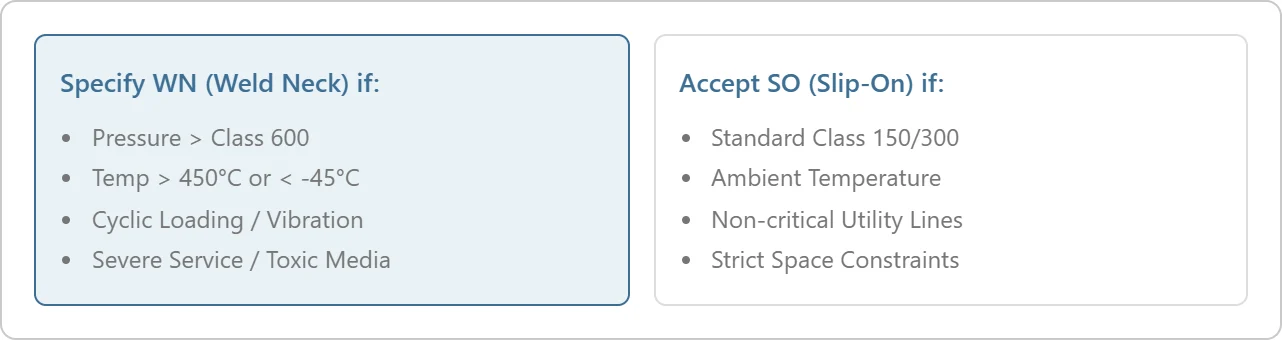
DTC Decision Matrix: Which one should you specify?
Conclusion If your priority is long-term reliability and compliance with stringent safety codes, the Weld Neck flange is your best insurance policy. At DTC Flowtech, we provide both types in a wide range of materials, including A105, SS304/316, and Duplex steels.
Need a Quote? Submit your project specifications to our technical team for a optimized PVF solution.
Related Articles
-
 July 29,2026
Welding vs. Grooving: Why Modern Commercial Projects are Switching to DTC Grooved Systems
The Labor Cost Revolution In the US and European commercial construction markets, labor is the single highest expense. Welding a 6-inch fire main requires a skilled welder, fire permits, and significant time. 1. 3x Faster Installation A DTC grooved system can be installed 3 to 4 times faster than a …
-
 July 29,2026
An Introduction to Grooved Piping Systems: Speed, Flexibility, and Vibration Dampening
1. The Grooved Concept Instead of welding or threading, a groove is rolled or cut into the end of the pipe. A Grooved Coupling (containing a C-shaped gasket) is then bolted over the two pipe ends to create a seal. 2. Rigid vs. Flexible Couplings Rigid Couplings: Create a joint that behaves like a we …
-
 July 29,2026
Avoiding the “Paperwork Trap”: Why DTC Conducts Independent PMI and Hardness Testing
The Risk of Document Fraud In the global PVF market, a certificate is only as good as the company behind it. Unfortunately, “paperwork-only” suppliers often pass off inferior materials with forged MTCs. 1. Positive Material Identification (PMI) At DTC, we don’t just trust the mill; …