

Beyond the Price Tag: Why Engineers Prioritize Weld Neck Flanges for High-Cycle Service
The Illusion of Initial Savings In large-scale EPC projects, the procurement team often gravitates toward Slip-On (SO) flanges because the initial purchase price is 20% to 40% lower than Weld Neck (WN) alternatives. However, at DTC Flowtech, we advise our clients to look at the Total Cost of Ownership (TCO) and the Safety Factor.
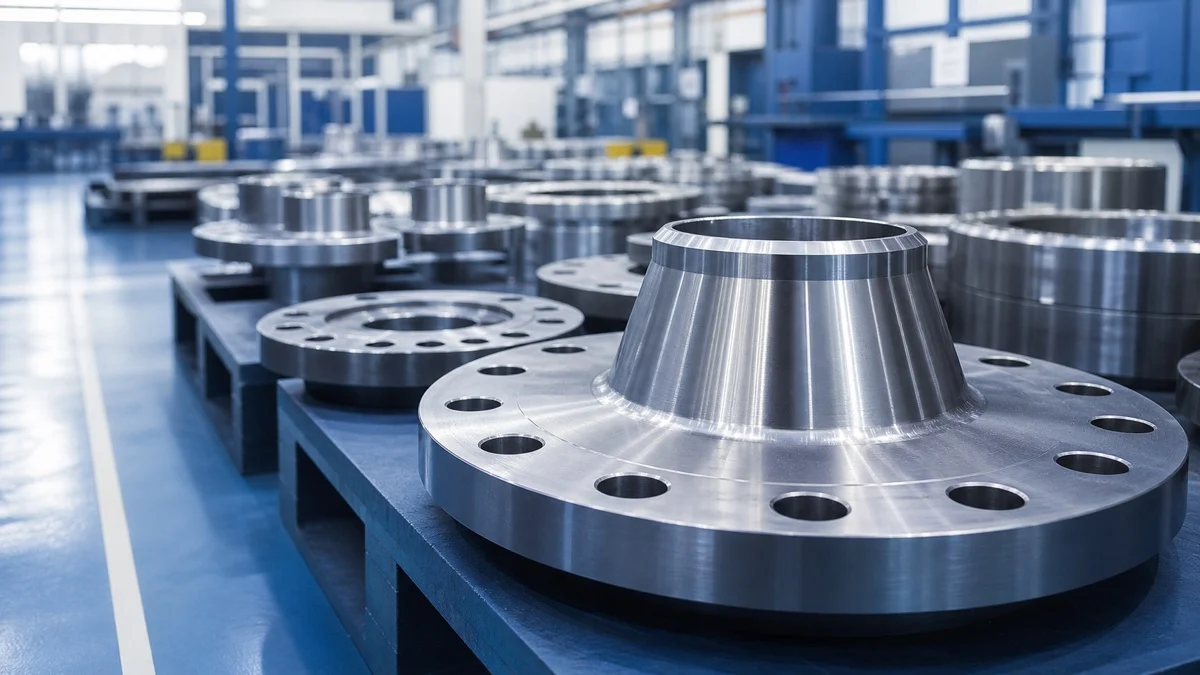
1. The Fatigue Life Reality The most critical difference lies in Fatigue Strength. According to stress analysis data, the fatigue life of a Weld Neck flange is approximately 2.5 times that of a Slip-On flange. In systems subject to “Cyclic Loading”—where thermal expansion or mechanical vibration causes repeated stress—the SO flange’s fillet weld acts as a stress concentrator. Over time, this leads to micro-cracking and catastrophic failure, whereas the WN’s tapered hub distributes stress evenly into the pipe wall.
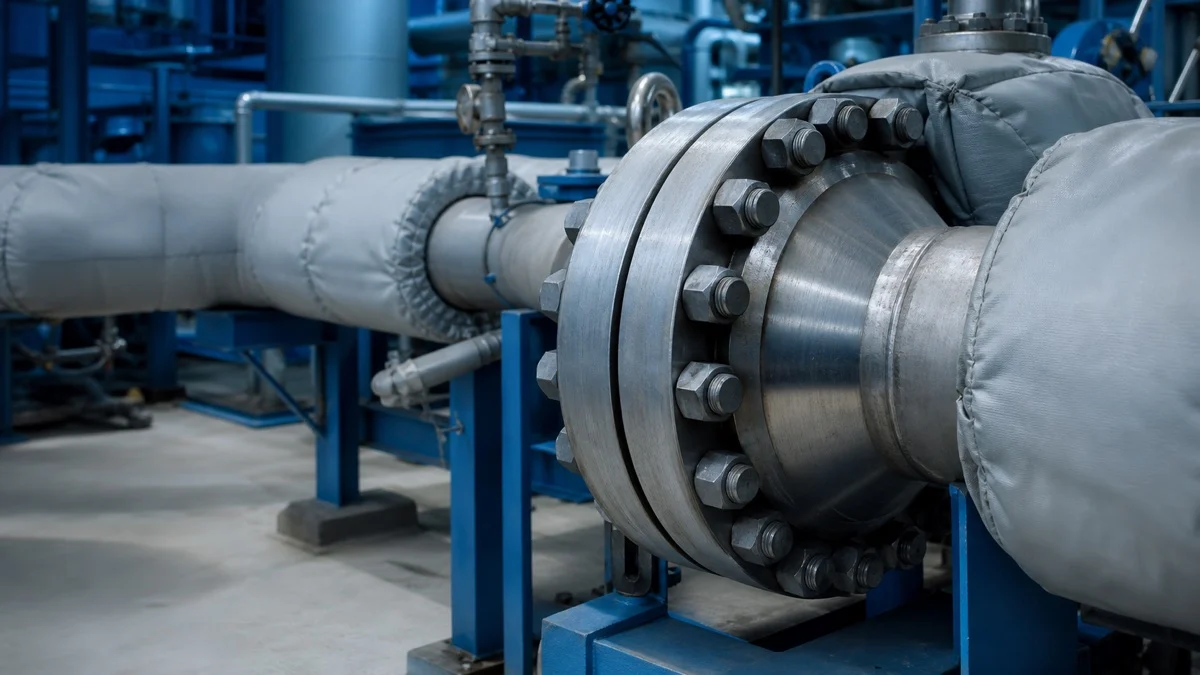
2. NDT Compliance and Risk Mitigation For high-risk industries like Oil & Gas or Chemical Processing, “Guesswork” is not an option. Because WN flanges allow for 100% Radiographic (RT) verification, engineers have absolute proof of weld penetration. With Slip-Ons, you are relying on surface-level checks. If a hidden internal crack leads to a leak in a toxic media line, the cost of an emergency shutdown and environmental cleanup will far outweigh the initial savings on the flange.

3. DTC’s Expert Recommendation While Slip-Ons are excellent for low-pressure water or air lines, DTC recommends Weld Neck flanges for:
- Pressure ratings above Class 600.
- Media temperatures exceeding 450°C.
- Piping systems where 100% X-ray testing is mandatory.
DTC Decision Matrix for Procurement Managers
- Choose SO for non-critical, low-pressure utilities where space is extremely tight.
- Choose WN for steam, volatile chemicals, and high-pressure infrastructure to ensure decades of leak-free service.
Related Articles
-
 July 29,2026
Welding vs. Grooving: Why Modern Commercial Projects are Switching to DTC Grooved Systems
The Labor Cost Revolution In the US and European commercial construction markets, labor is the single highest expense. Welding a 6-inch fire main requires a skilled welder, fire permits, and significant time. 1. 3x Faster Installation A DTC grooved system can be installed 3 to 4 times faster than a …
-
 July 29,2026
An Introduction to Grooved Piping Systems: Speed, Flexibility, and Vibration Dampening
1. The Grooved Concept Instead of welding or threading, a groove is rolled or cut into the end of the pipe. A Grooved Coupling (containing a C-shaped gasket) is then bolted over the two pipe ends to create a seal. 2. Rigid vs. Flexible Couplings Rigid Couplings: Create a joint that behaves like a we …
-
 July 29,2026
Avoiding the “Paperwork Trap”: Why DTC Conducts Independent PMI and Hardness Testing
The Risk of Document Fraud In the global PVF market, a certificate is only as good as the company behind it. Unfortunately, “paperwork-only” suppliers often pass off inferior materials with forged MTCs. 1. Positive Material Identification (PMI) At DTC, we don’t just trust the mill; …