

Forged Fittings: Deciphering the 3000# and 6000# Ratings for High-Pressure Safety
The “Pressure Rating” Misconception A common error in international procurement is assuming that a “3000#” forged fitting is rated for 3000 PSI in all conditions. At DTC Flowtech, we clarify to our clients that these Ratings (Class 2000, 3000, 6000) refer to the wall thickness capability, correlating to the pipe schedule. For example, a Class 3000 Socket Weld fitting is generally intended for use with Schedule 80 pipe.
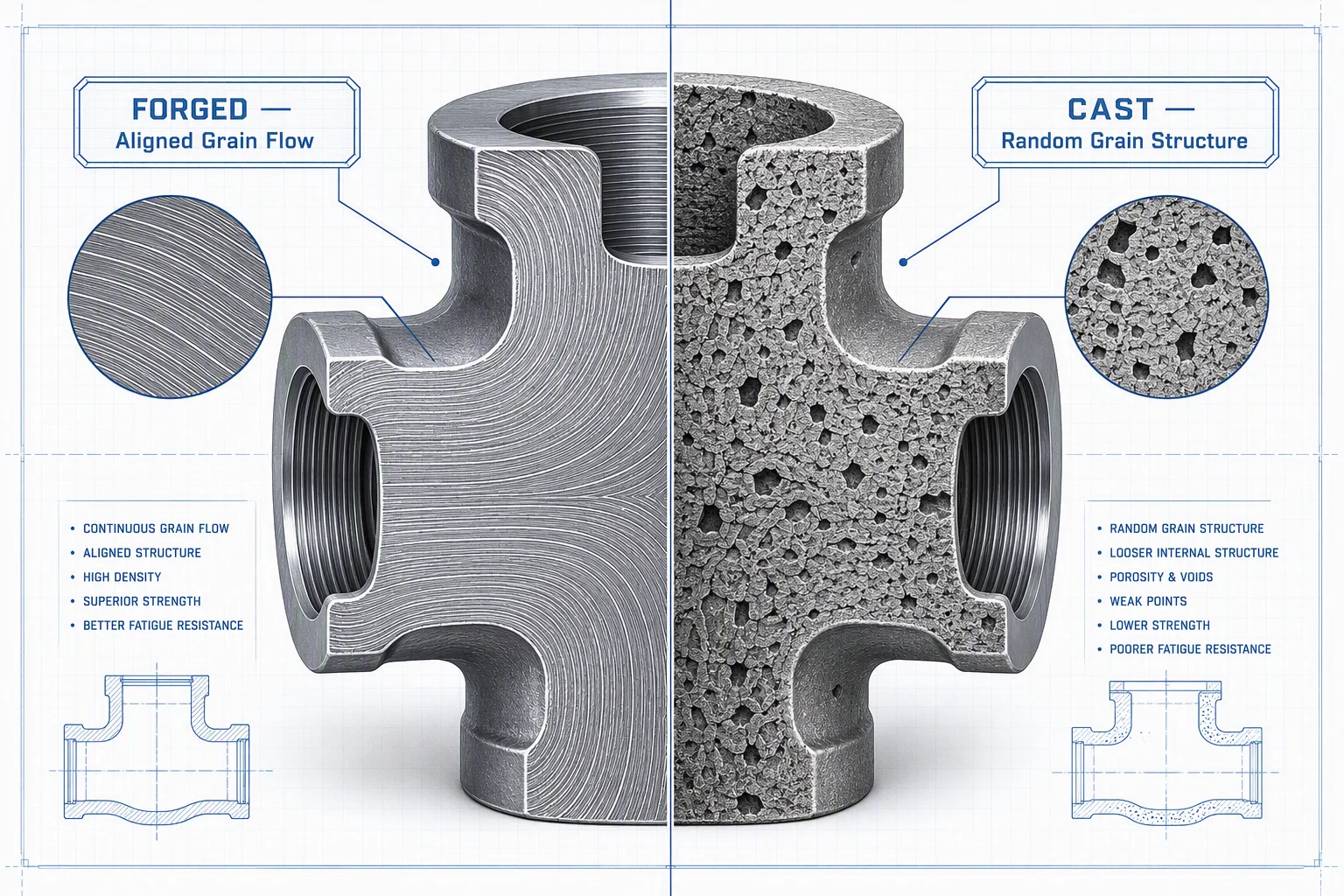
1. Forging Ratio: The Hidden Quality Benchmark The strength of a forged fitting lies in its grain flow. Low-quality manufacturers may use “Cast” products and finish-machine them to look like forgings. However, true ASTM A105 Forgings from DTC undergo a rigorous forging ratio process, ensuring that the internal metal structure is compressed and aligned to handle high-vibration and cyclic loading. In a high-pressure hydraulic line, a cast-impersonator fitting will crack; a DTC forged fitting will endure.
2. MTC 3.1 Transparency & Traceability For EPC contractors, the Mill Test Certificate (MTC) is the only shield against liability. DTC provides full 3.1 traceability, detailing the heat number, chemical composition, and mechanical test results for every batch. We advocate for 100% Positive Material Identification (PMI) on stainless steel fittings to ensure 316L is truly 316L, preventing premature corrosion in chemical processing plants.

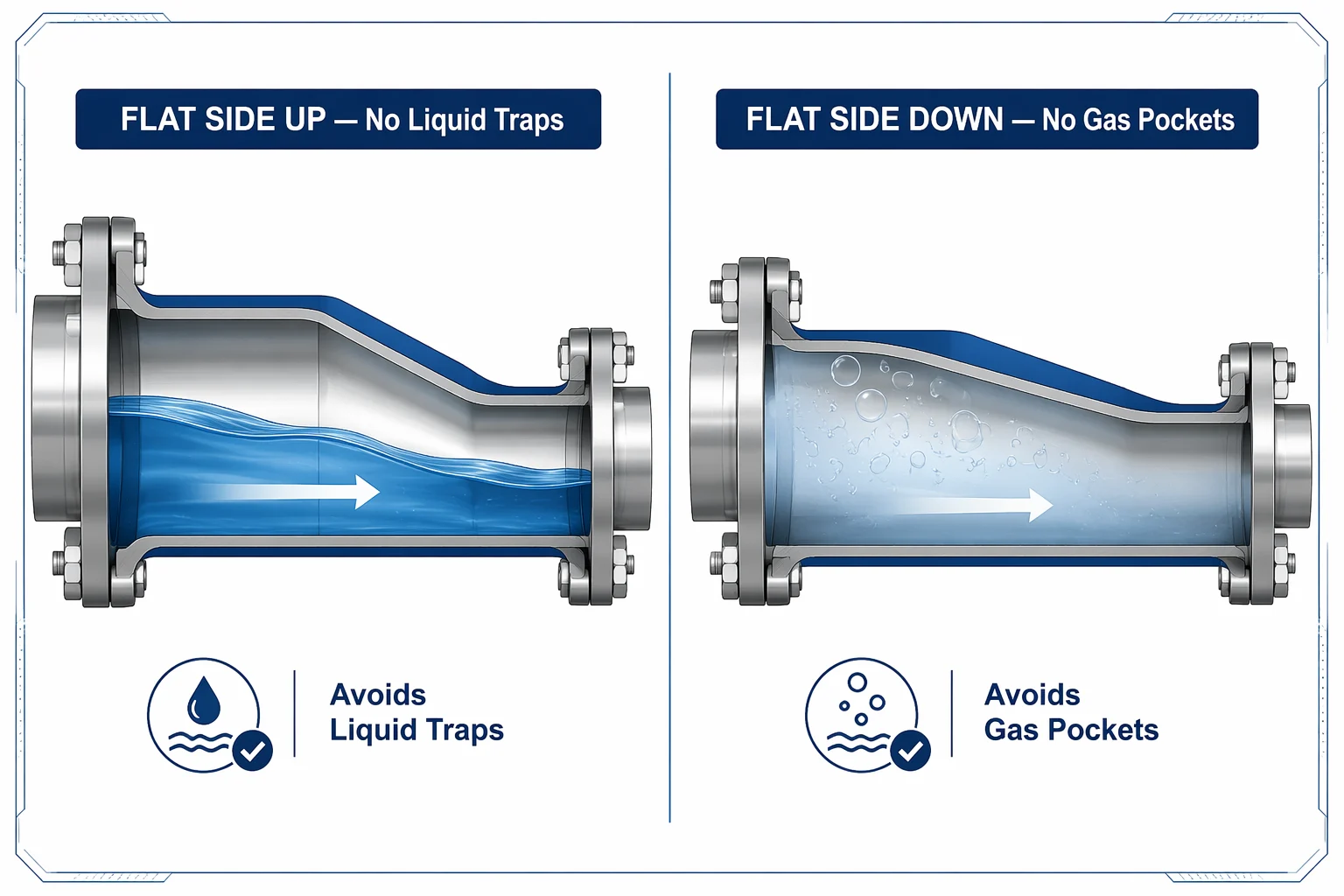
DTC Pro-Tip for Buyers: When specifying Eccentric Reducers, always indicate if the “Flat Side” should be on top (to avoid liquid traps) or bottom (to avoid gas pockets). This small detail separates a standard supplier from a technical partner.
Related Articles
-
 July 29,2026
Welding vs. Grooving: Why Modern Commercial Projects are Switching to DTC Grooved Systems
The Labor Cost Revolution In the US and European commercial construction markets, labor is the single highest expense. Welding a 6-inch fire main requires a skilled welder, fire permits, and significant time. 1. 3x Faster Installation A DTC grooved system can be installed 3 to 4 times faster than a …
-
 July 29,2026
An Introduction to Grooved Piping Systems: Speed, Flexibility, and Vibration Dampening
1. The Grooved Concept Instead of welding or threading, a groove is rolled or cut into the end of the pipe. A Grooved Coupling (containing a C-shaped gasket) is then bolted over the two pipe ends to create a seal. 2. Rigid vs. Flexible Couplings Rigid Couplings: Create a joint that behaves like a we …
-
 July 29,2026
Avoiding the “Paperwork Trap”: Why DTC Conducts Independent PMI and Hardness Testing
The Risk of Document Fraud In the global PVF market, a certificate is only as good as the company behind it. Unfortunately, “paperwork-only” suppliers often pass off inferior materials with forged MTCs. 1. Positive Material Identification (PMI) At DTC, we don’t just trust the mill; …