

An Engineering Guide to Butt-Weld and Forged Fittings: ASME B16.9 & B16.11 Standards
1. Geometric Precision in Piping Systems Pipe fittings are the essential nodes that change flow direction, branch off lines, or adapt pipe sizes. In professional PVF procurement, they are divided into two primary manufacturing methods:
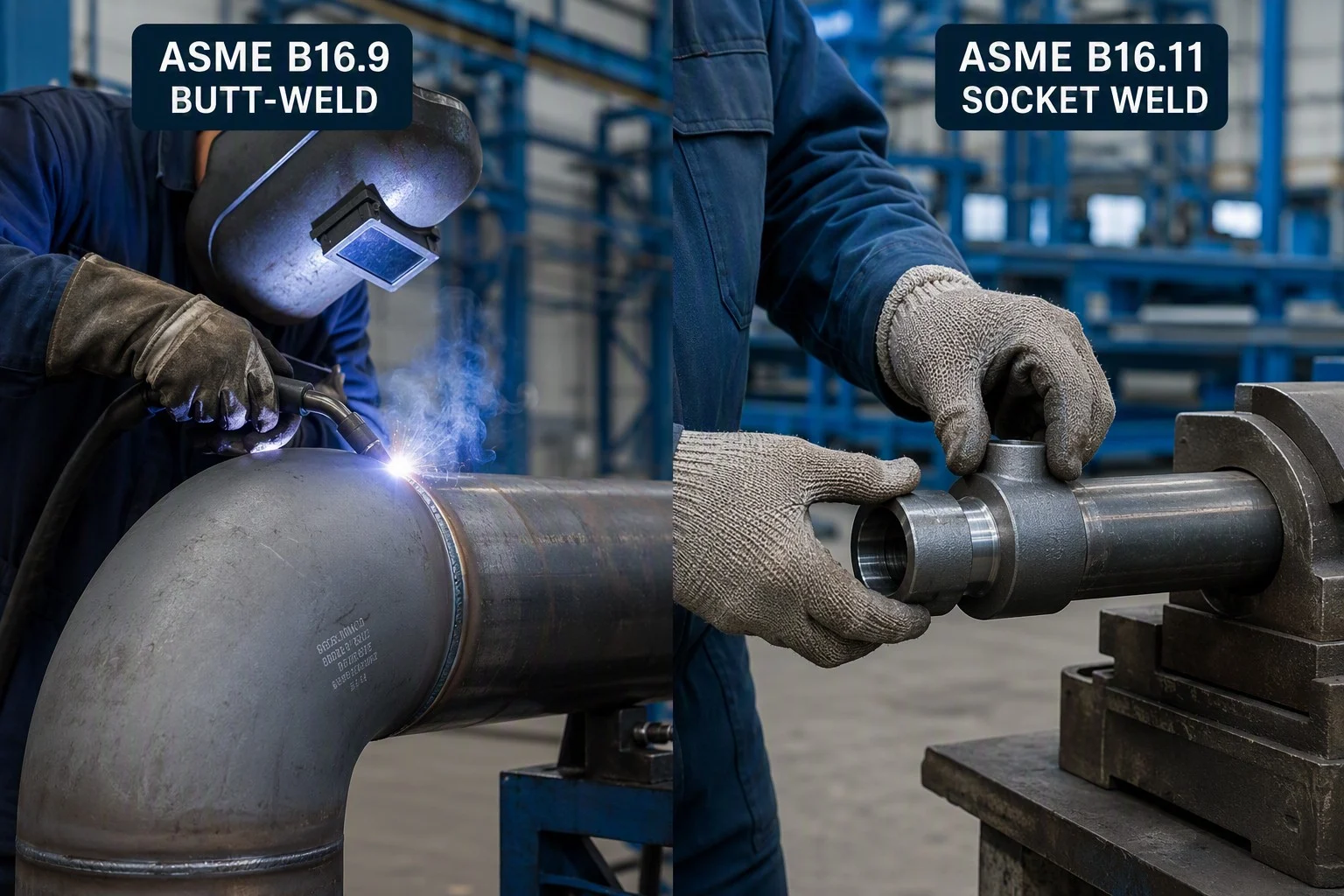
- Butt-Weld Fittings (ASME B16.9): Used for larger diameter systems. They are welded edge-to-edge with the pipe, requiring the wall thickness (Schedule) of the fitting to match the pipe exactly to ensure a smooth internal flow.
- Forged Fittings (ASME B16.11): Typically used for small-bore piping (usually ≤ 2″). These are available in Socket Weld (pipe sits inside a socket) or Threaded connections, designed for high-pressure service.
2. Core Components and Their Functions
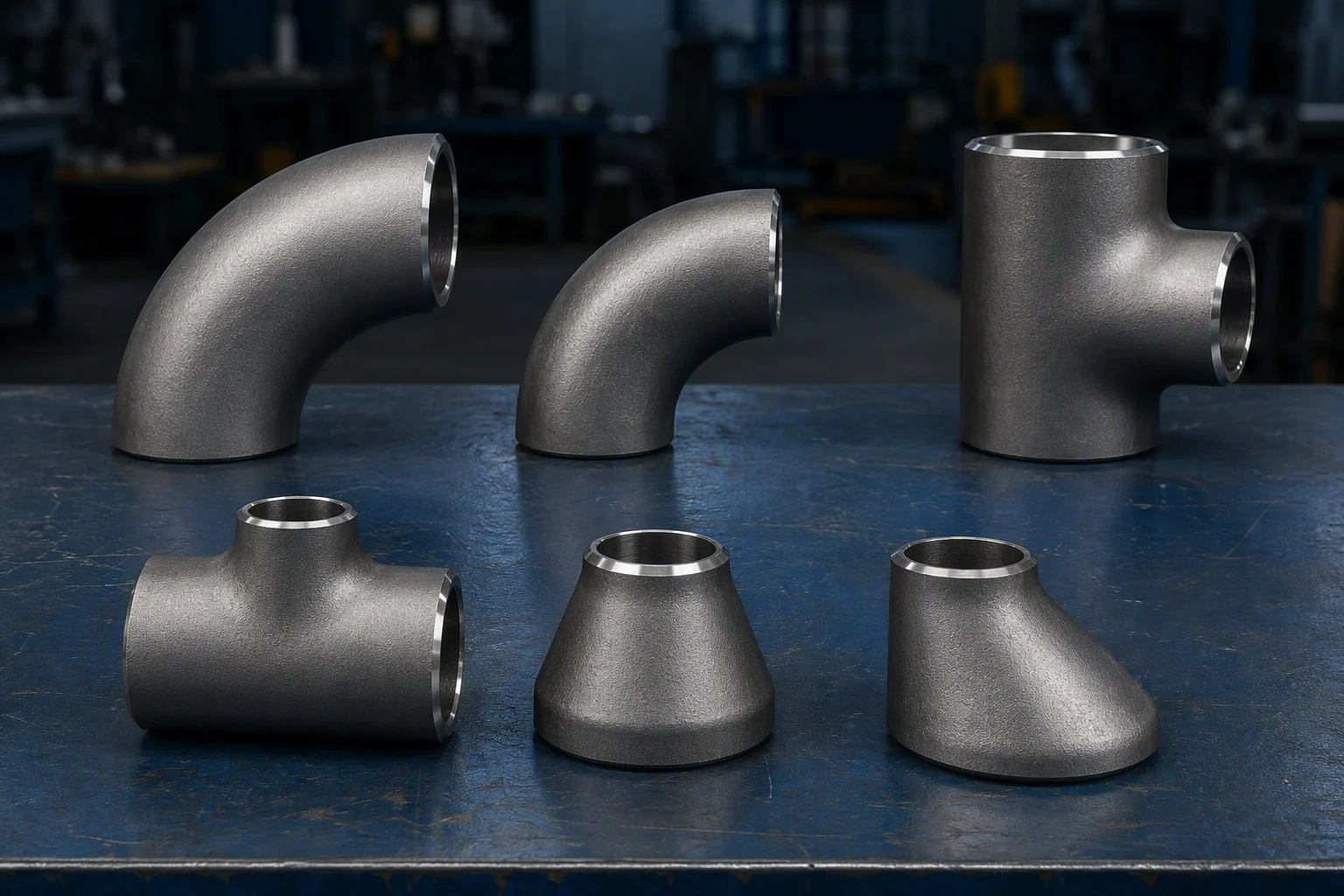
- Elbows (90° & 45°): Available in Long Radius (LR) where R=1.5D (lowest flow resistance) and Short Radius (SR) where R=1.0D (used in tight spaces).
- Tees: Equal Tees maintain the same branch size; Reducing Tees allow for a smaller branch connection.
- Reducers: Concentric Reducers maintain the centerline of the pipe; Eccentric Reducers maintain a flat side (Top or Bottom), critical in pump suctions to prevent air pockets.
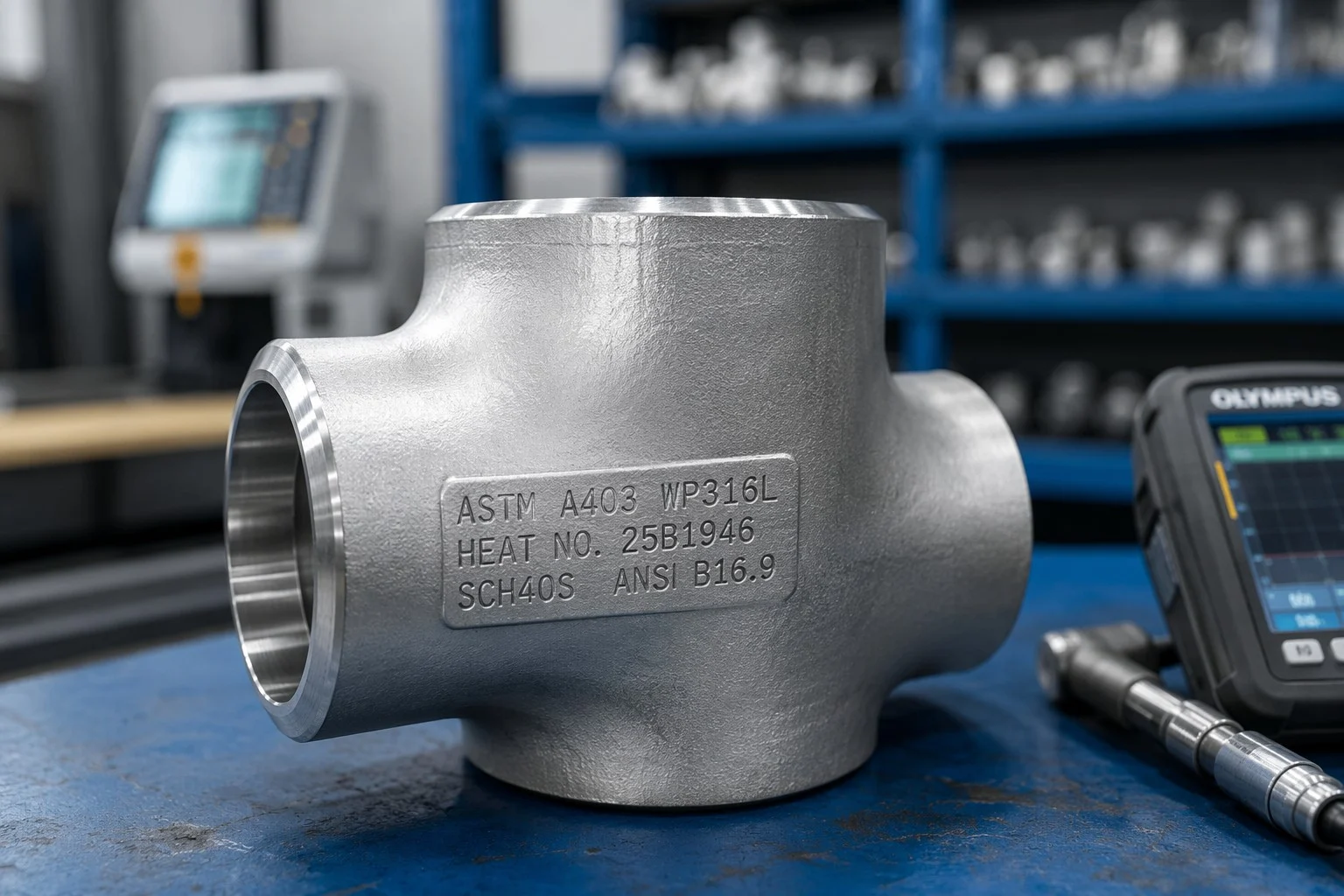
3. Material Integrity Fittings must be chemically and mechanically compatible with the pipe. Common grades include ASTM A234 WPB (Carbon Steel), ASTM A403 WP304/316 (Stainless Steel), and ASTM A105 (Forged Carbon Steel).
Related Articles
-
 July 29,2026
Welding vs. Grooving: Why Modern Commercial Projects are Switching to DTC Grooved Systems
The Labor Cost Revolution In the US and European commercial construction markets, labor is the single highest expense. Welding a 6-inch fire main requires a skilled welder, fire permits, and significant time. 1. 3x Faster Installation A DTC grooved system can be installed 3 to 4 times faster than a …
-
 July 29,2026
An Introduction to Grooved Piping Systems: Speed, Flexibility, and Vibration Dampening
1. The Grooved Concept Instead of welding or threading, a groove is rolled or cut into the end of the pipe. A Grooved Coupling (containing a C-shaped gasket) is then bolted over the two pipe ends to create a seal. 2. Rigid vs. Flexible Couplings Rigid Couplings: Create a joint that behaves like a we …
-
 July 29,2026
Avoiding the “Paperwork Trap”: Why DTC Conducts Independent PMI and Hardness Testing
The Risk of Document Fraud In the global PVF market, a certificate is only as good as the company behind it. Unfortunately, “paperwork-only” suppliers often pass off inferior materials with forged MTCs. 1. Positive Material Identification (PMI) At DTC, we don’t just trust the mill; …