

How to Prepare a Technical RFQ for Industrial Flanges
A technical RFQ, or Request for Quotation, should include enough information for the supplier to identify the required flange and check its compatibility with the piping system.
An incomplete RFQ may lead to repeated questions, incorrect selection or delays in quotation and production.
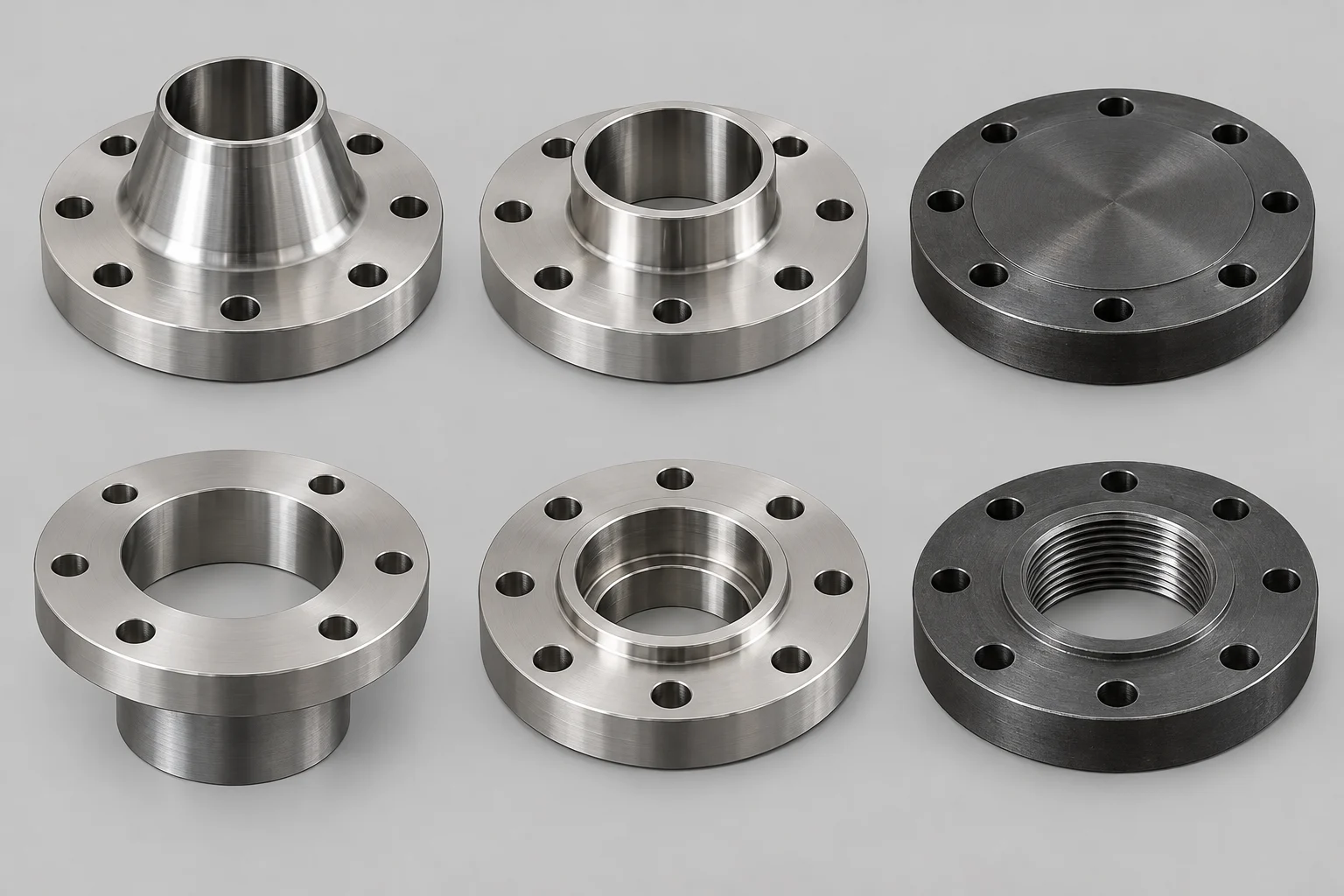
1. Specify the Flange Type
First, identify the required flange type:
- Weld Neck Flange
- Slip-On Flange
- Blind Flange
- Lap Joint Flange
- Socket Weld Flange
- Threaded Flange
The flange type should match the pipe connection method, operating conditions and maintenance requirements.
2. Provide the Size and Dimensions
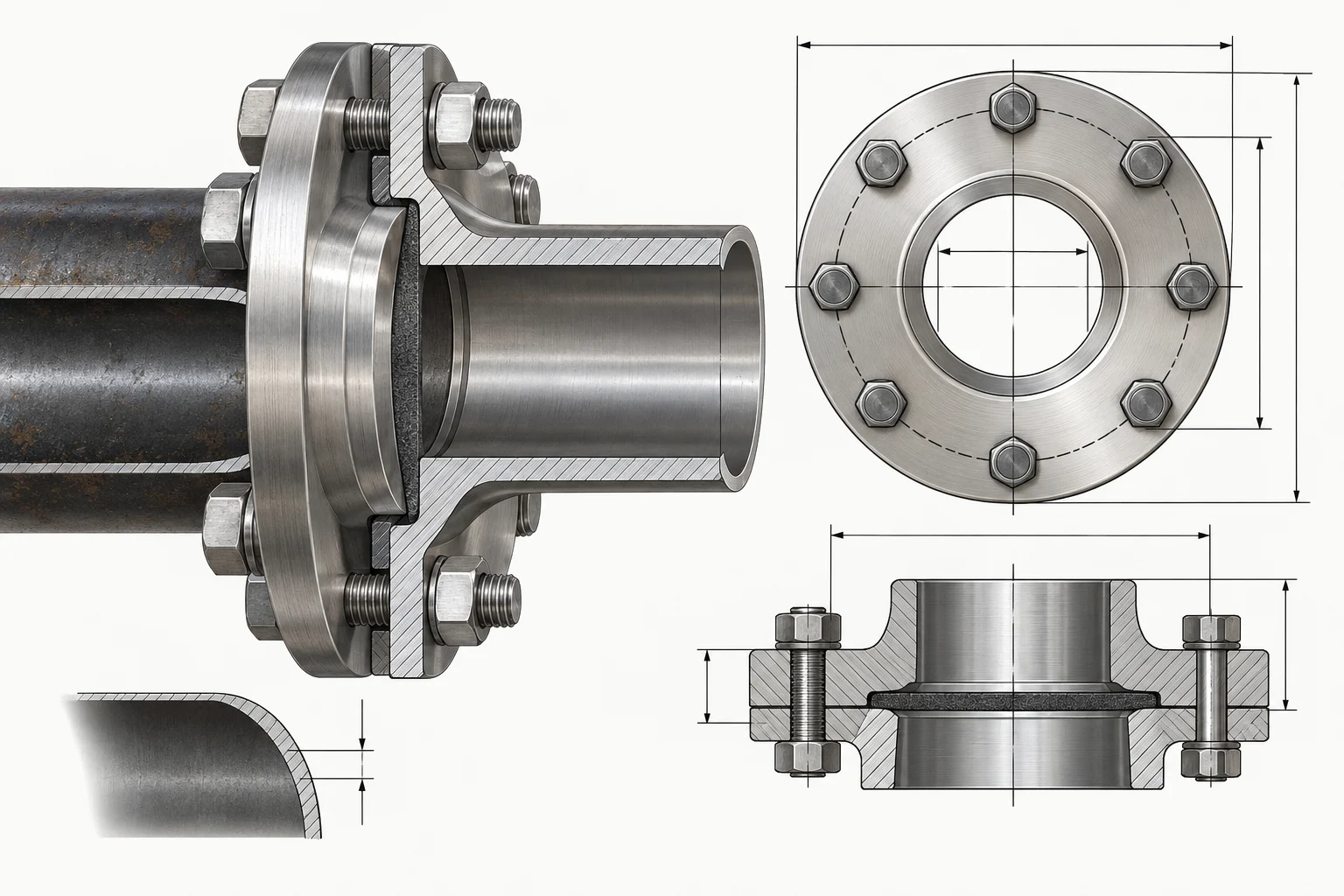
State the nominal pipe size using NPS or DN.
For replacement projects or non-standard requirements, also provide:
- Outside diameter
- Bore or inside diameter
- Flange thickness
- Bolt circle diameter
- Number and size of bolt holes
- Pipe wall thickness
A technical drawing, dimensional table or existing sample can help the supplier confirm the required dimensions.
3. Confirm the Standard and Pressure Rating
The RFQ should specify the applicable standard, such as:
- ASME B16.5
- ASME B16.47
- EN 1092-1
- JIS B2220
The pressure rating should also be clearly stated, for example:
- ASME Class 150, Class 300 or Class 600
- PN10, PN16 or PN40
Different standards may use different dimensions, drilling patterns and pressure designations. The standard should therefore be confirmed before quotation.
4. State the Material and Grade
Common flange materials include:
- Carbon steel
- Stainless steel
- Alloy steel
Typical material grades include:
- ASTM A105
- ASTM A350 LF2
- ASTM A182 F304
- ASTM A182 F316
Material selection should be based on the process medium, operating temperature, working pressure and corrosion conditions.
5. Specify the Facing and Connection
The RFQ should include the required flange facing:
- RF — Raised Face
- FF — Flat Face
- RTJ — Ring Type Joint
It should also specify the connection method, pipe outside diameter and any special requirements related to welding, threading or machining.
The flange, gasket, bolts and connected equipment should be checked as one complete connection system.
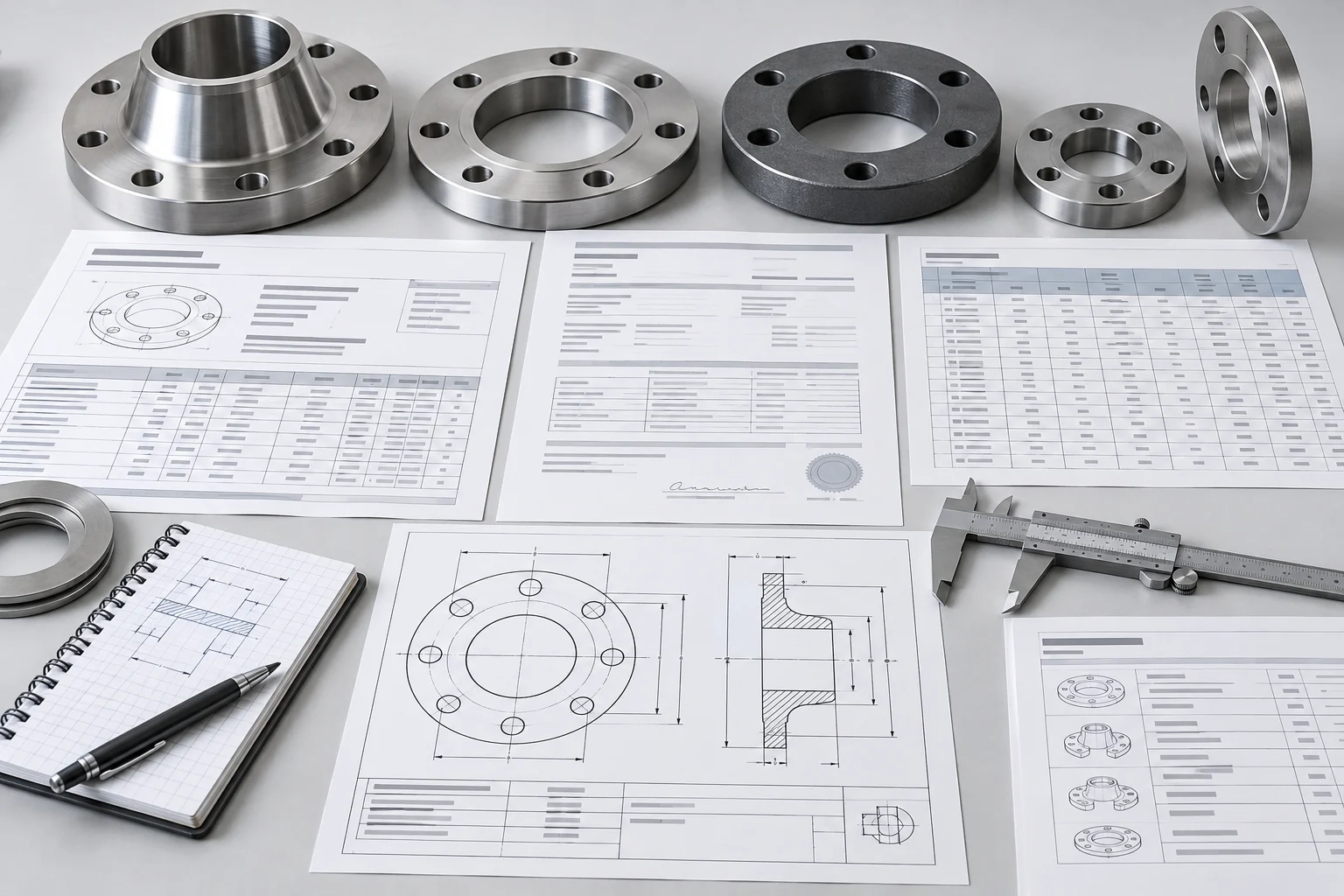
6. Confirm Inspection and Documentation
For industrial projects, the buyer may need to request:
- EN 10204 3.1 Material Test Certificate
- Chemical Composition Report
- Mechanical Properties Report
- Dimensional Inspection Report
- Pressure or Leakage Test Report
- Certificate of Conformity
Documentation requirements should be stated before production to avoid delays.
7. Add Quantity and Delivery Information
The RFQ should also include:
- Required quantity
- Delivery destination
- Required delivery date
- Packaging requirements
- Marking or customer logo requirements
- Special inspection requirements

RFQ Checklist
Before sending the inquiry, confirm that the following information is included:
Flange type, size, standard, pressure rating, material grade, facing, connection details, quantity and documentation requirements.
A complete technical RFQ helps the supplier check compatibility and prepare a more accurate quotation.
Related Articles
-
 October 5,2026
Ringlock Scaffolding System Selection Guide: Components, Configuration and Load Requirements
A practical guide to choosing ringlock scaffolding: main components, fixed vs mobile configuration, steel vs aluminum, load requirements and RFQ preparation.
-
 July 29,2026
Welding vs. Grooving: Why Modern Commercial Projects are Switching to DTC Grooved Systems
Why commercial projects are switching from welding to grooved systems: 3-4x faster installation, no hot-work permits, built-in expansion and UL/FM approval.
-
 July 29,2026
An Introduction to Grooved Piping Systems: Speed, Flexibility, and Vibration Dampening
1. The Grooved Concept Instead of welding or threading, a groove is rolled or cut into the end of the pipe. A Grooved Coupling (containing a C-shaped gasket) is then bolted over the two pipe ends to create a seal. 2. Rigid vs. Flexible Couplings Rigid Couplings: Create a joint that behaves like a we …